Why Safety Is the Foundation of Every Successful Industrial Project
On a large-scale industrial project, one missed detail can create a ripple effect across the entire jobsite. With multiple contractors, trades, and moving parts working simultaneously, even small changes to designs, schedules, or site conditions can introduce significant challenges. Keeping everyone aligned requires more than communication. It requires proactive coordination, with safety guiding every decision.
We spoke with Kelly Kirkendoll of Vulcan Industrial Contractors about managing the complexities and ensuring safety is involved throughout the work. From supervisors who model safe practices to employees who speak up about unsafe conditions, safety requires participation across the team.
Large-Scale Industrial Projects Require Greater Safety Coordination
Kirkendoll points to the difference between a smaller maintenance assignment with 10 to 15 workers and a large design-build project. With a smaller crew and scattered maintenance tasks, planning and coordination are generally easier to manage. On larger projects, design and planning may continue throughout construction, with different trades and contractors competing for space and time.
The challenge is understanding how one crew’s work affects another. Nearby activities may require employees to leave an area, change their timing, or prepare for hazards introduced by another team.
For the safety team, staying involved in scheduling means knowing which activities are coming next. A large generator delivery, an air handling unit being lifted onto a roof, or equipment being prepared for energization each brings different considerations. Barricades, signage, specialized personal protective equipment (PPE), and coordination with surrounding crews are arranged in advance.
Kirkendoll describes this involvement as a way to get ahead of potential issues. Safety personnel need visibility into the schedule so they can prepare for upcoming work and confirm that employees have what they need before an activity begins.
Where Industrial Safety Planning Begins
According to Kirkendoll, safety planning should begin as soon as contracts are signed. The first step is understanding the scope: what work will be performed, where it will take place, and what equipment, tools, or training employees will need.
That preparation helps the team arrive ready to work rather than leave others waiting while necessary resources are located or arranged.
Understanding the scope also means looking beyond the immediate task. Who will be working nearby? What will they be doing? Could their activities affect when or where Vulcan Industrial’s crews can work? Those details help determine how employees should be trained and what they need to perform their assignments safely.
Reviewing drawings and contract requirements provides part of the picture. Walking the site gives the team an opportunity to see the actual conditions, identify existing hazards, and ask the customer or general contractor questions about what will change before work begins.
Working at height, for example, can mean very different conditions depending on whether the task is 10 feet or 40 feet above the ground. Seeing the work area firsthand helps inform job hazard analyses and risk assessments.
Continued walkthroughs are especially important on fast-moving projects. Kirkendoll points to data center construction, where conditions can change significantly overnight.
“You leave Monday evening and Tuesday morning you come in, and it looks like a completely different jobsite,” he says.
Keeping pace with those changes requires the safety team to remain present in the field and reassess what is happening around the crews.
Experienced Leadership and Training Preparation
Field experience helps leaders recognize what a task will require and where problems may arise. Foremen and superintendents who have performed the work themselves bring practical knowledge of the materials, tools, and conditions their crews will encounter.
Training is equally important. Kirkendoll notes that some projects require OSHA 10 or OSHA 30 training before employees enter the site. Requirements depend on the job, and employees need guidance and education appropriate to the work they will perform.
Experience can provide a strong starting point, but Kirkendoll has also seen employees enter the field directly after high school and develop into superintendents. Proper guidance, schooling, and training help people build the knowledge they need to succeed.
At Vulcan Industrial, Kirkendoll identifies the safety department’s work with employees as a particular strength. Its online training platform allows employees to access training through the company intranet and update training that is approaching expiration.
Keeping expectations consistent also requires continued communication as information changes. Kirkendoll emphasizes explaining why a practice matters and addressing concerns constructively. A positive approach helps employees understand and correct an issue, while accountability remains necessary when someone chooses not to follow safety expectations.
Managing High-Risk Work Means Preparing for the Details
The controls needed for high-risk work depend on the activity. Work around energized equipment, elevated work, confined spaces, and trenching or excavation each require different preparation.
Across those activities, Kirkendoll emphasizes two essentials: employees must have the proper training, and the crew and its leaders must review the work in detail. Everyone should understand their own assignment and those working alongside them.
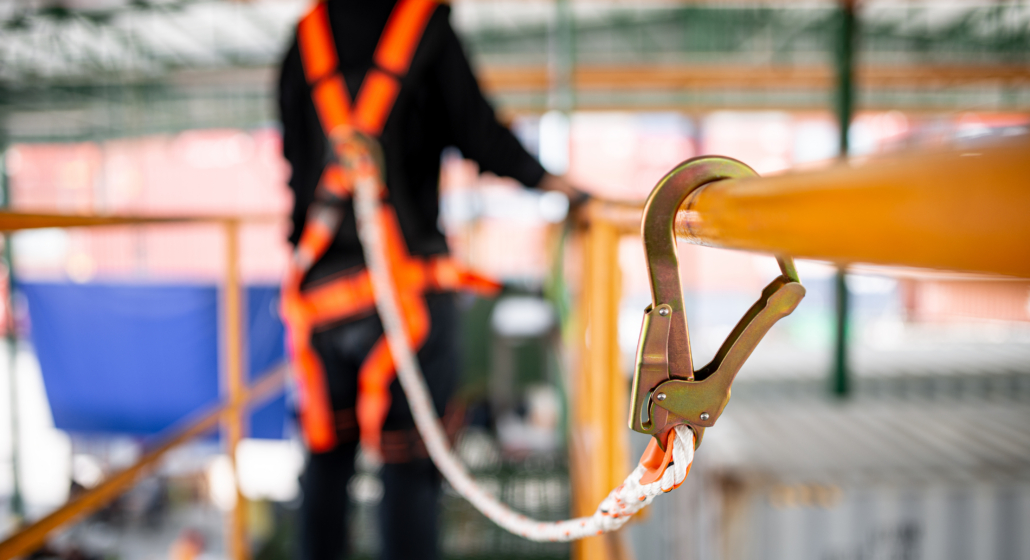
Task-specific preparation may include specialized PPE, barricades, boundaries, harnesses, lifelines, or air monitoring. Engineering decisions also play a role, with the goal of removing hazards where possible and planning the safest approach when access equipment such as scaffolding or ladders is needed.
Major activities can draw attention to the largest risks while smaller details are missed. Kirkendoll gives the example of a delivery arriving before the team realizes there are not enough barricades to keep others out of the unloading area. Another example is an uncharged radio losing power while workers are communicating with a crane operator.
“It is the smaller things that tend to go overlooked because everyone’s so hyper-focused on the big ticket items,” he says.
Those details reinforce the importance of anticipating needs before work begins. Kirkendoll recalls a former foreman’s approach: have what the crew needs before they ask for it.
Preparation must also account for changing conditions. Significant rain, for example, may require outdoor work to be postponed, employees to move indoors, and the activity to be rescheduled.
Safety Culture Depends on Leadership and Stop Work Authority
Safety expectations carry more weight when leaders follow them. Kirkendoll describes the principle simply: “Practice what you preach.”
When supervisors wear the required PPE and actively participate in the safety program, employees see that the expectations apply across the team. Even something as straightforward as wearing safety glasses or gloves demonstrates that management takes safety seriously.
Employees also have a role in protecting one another. Vulcan Industrial’s Stop Work Authority program empowers workers to stop an unsafe activity and recognizes employees who identify potential problems.
Kirkendoll emphasizes that speaking up is a responsibility as well as a right. If an employee sees someone doing something unsafe or notices an unsafe condition, that employee should stop the activity.
The reason is personal. Coworkers have families and responsibilities beyond the jobsite, and looking out for one another helps ensure they can return home to those people.
For Kirkendoll, that shared responsibility is central to the work. A safety culture depends on people being willing to act when they see a concern and on leaders reinforcing that expectation through their own behavior.
A Proactive Safety Approach Takes a Connected Team
Kirkendoll identifies training, supervision, and communication as strengths of Vulcan Industrial’s approach. Having worked around Vulcan Industrial before joining the company, he had already seen its safety department’s commitment to preparing employees. As part of the team, he now sees that work firsthand.
He also points to supervisors who discuss upcoming work, anticipate potential issues, and coordinate with one another to address problems before they happen.
From contract signing through daily fieldwork, safety on large-scale industrial projects depends on proactive planning, trained employees, clear communication, and leaders who put those expectations into practice. Site walkthroughs, task-specific preparation, and the responsibility to stop unsafe work help crews anticipate risks and respond as conditions change. At Vulcan Industrial, these practices reflect a shared commitment to looking out for one another, so the people doing the work can return home to the people they love.

